
Arkansas addressed this problem directly by passing “posting paint” legislation in 1989, making it the first U.S. state to give purple paint official legal standing. The choice of purple was deliberate: the color is highly visible against natural backgrounds and, crucially, can be distinguished by people with color blindness.
Today, nearly half of all U.S. states have purple paint laws on their books. The core message is consistent — keep out — but the specific rules differ significantly depending on where you are.
A legal tool with deep roots
Before purple paint laws existed, property owners relied on posted signs that were vulnerable to theft, weather damage, and vandalism. Arkansas created the first legal framework for paint-based boundary marking in 1989, a model that nearly half of U.S. states have since adopted in some form. The system draws on the older tradition of trail blazing — marking paths through wilderness — and applies it to the very different purpose of keeping people out.
Texas bans all entry; North Carolina draws the line at hunting and fishing
State-by-state variation is one of the most important things to understand about purple paint laws. In Texas, purple markings on posts or trees signal that the land is entirely off-limits — no exceptions for any type of visitor.
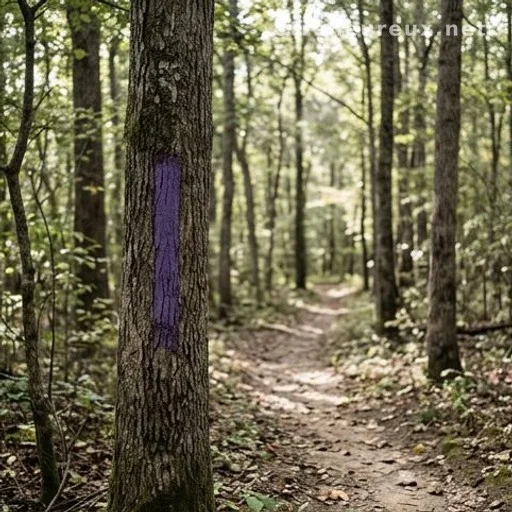
In North Carolina, the rules are more nuanced. Outdoor enthusiasts may cross purple-marked boundaries, provided they are not hunting, fishing, or trapping. The paint specifically restricts those activities rather than all forms of access.
This gap between states means that assumptions can be costly. A hiker familiar with North Carolina’s rules who encounters purple paint in Texas would be trespassing the moment they step onto that land. Checking local regulations before entering any marked area is essential.