
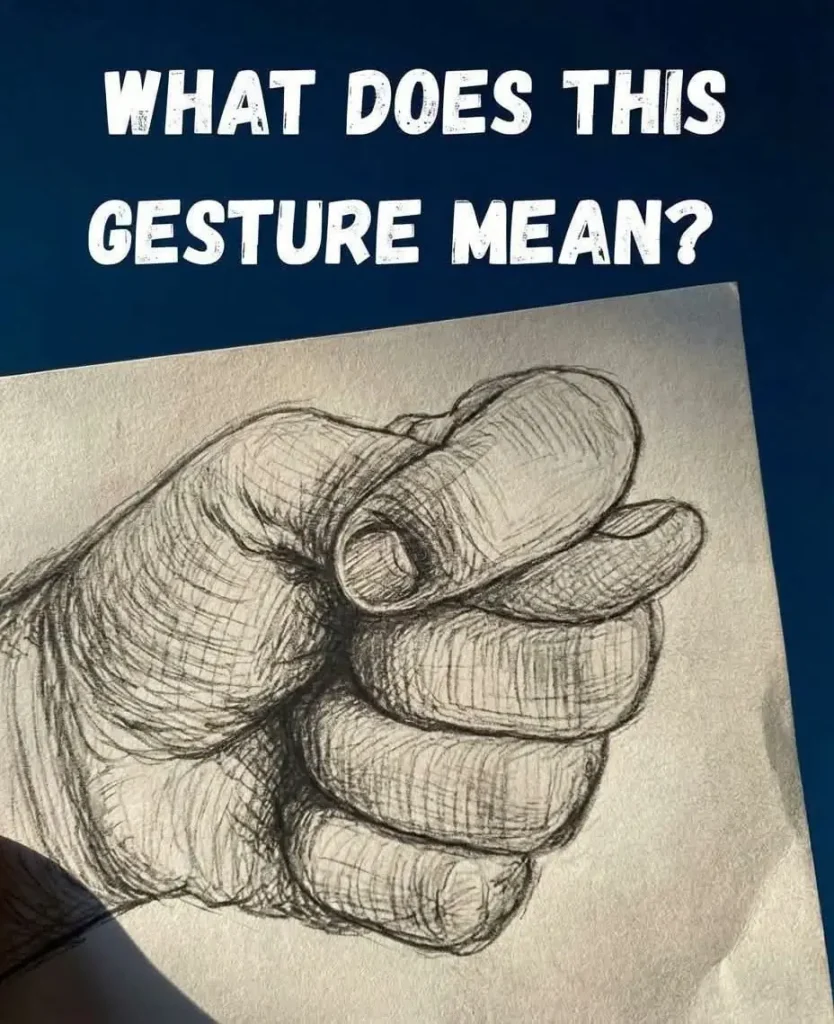
A clenched fist with the thumb tucked between the index and middle fingers: this is the fig gesture, one of the oldest symbolic hand signs in recorded human history. Far from a random movement, it served for centuries as a tool for social communication, protection, and even family bonding. Its story stretches from ancient nonverbal codes to 19th-century European drawing rooms and intimate family farewells.

In brief
- —Thumb tucked between two fingers: the fig gesture explained
- —Used in 19th-century Europe to refuse requests discreetly
- —Also a protective charm in several cultural traditions
A thumb between two fingers: what makes this gesture unique
At first glance, the fig gesture looks like an ordinary clenched fist. The distinguishing detail is subtle: the thumb is tucked between the index and middle fingers rather than resting on top.
See the rest on the next page ⬇⬇