
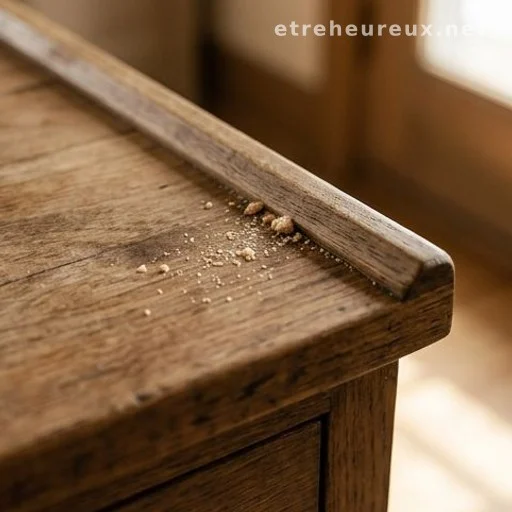
It requires no extra effort from the cook. The ridge simply intercepts falling crumbs and holds them on the counter surface, where they can be wiped into a bin in one clean sweep. For anyone who bakes regularly or prepares textured foods, the difference in daily cleanup is tangible.
Architectural historians and professional chefs, according to the article, describe this kind of detail as a masterpiece of ergonomic design — a feature so quietly effective that most people live with it for years without recognising what it does.
The recessed shelf variant: a niche built into the island cabinet itself
A second form of the ledge is different in both position and function. Rather than a raised lip at the counter’s front edge, this version is a shallow recessed shelf set into the side or back panel of the island cabinets — a small, built-in niche rather than a surface barrier.
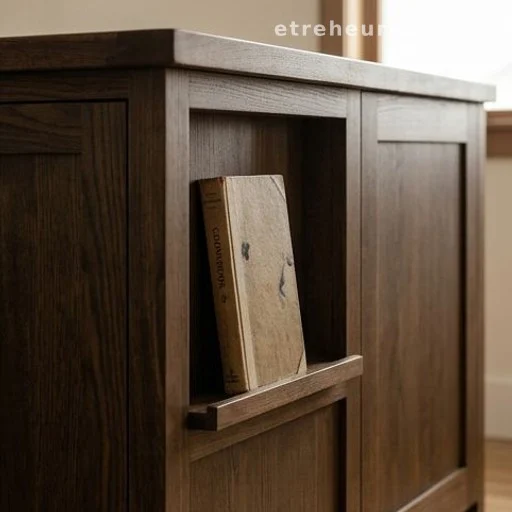
The article identifies this as a cookbook and appliance niche, though the source cuts off before fully detailing its documented uses. What is established is that the shelf sits below counter height, making it accessible without requiring the cook to reach across the main work surface.
The distinction matters for homeowners trying to identify which type they have. The crumb-catcher lip is visible from above and runs along the counter edge; the recessed niche is set into the vertical face of the island and is typically accessed from the side.
A design tradition built on necessity
Midwestern and Amish-inspired farmhouse kitchens were working spaces where every element had to justify its existence. Architectural historians note that features which appear decorative in modern homes frequently originated as direct responses to daily practical problems — from managing food debris to organising tools within arm’s reach of the cook.