
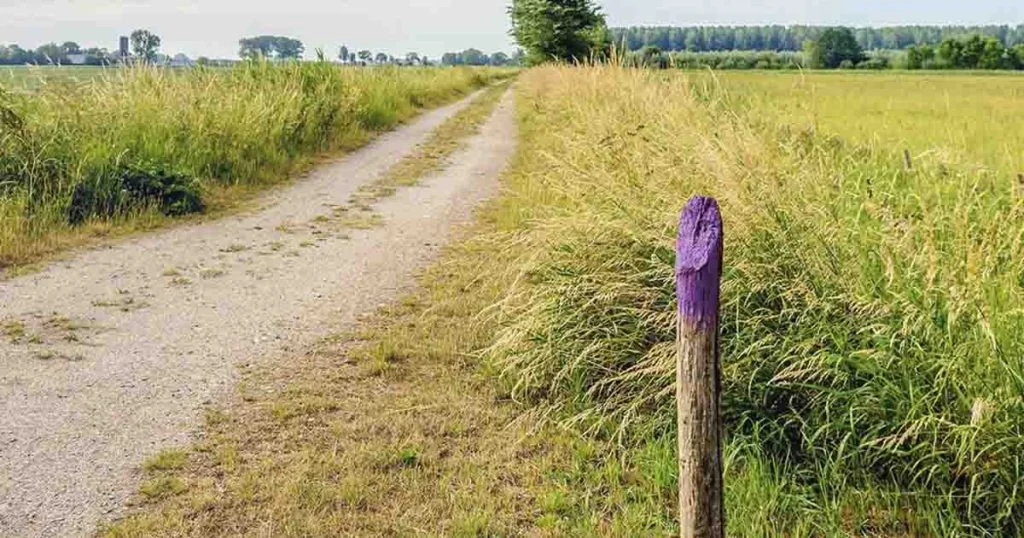
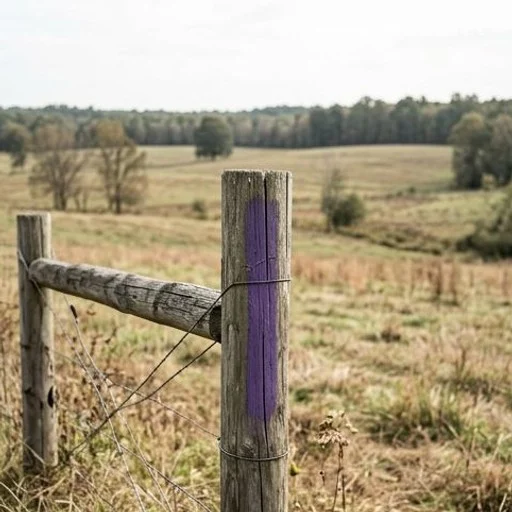
A stripe of purple paint on a fence post or tree is not a decorating choice — it is a legally recognized warning to stay off private property. Originating in Arkansas in 1989, this system is now recognized by nearly half of all U.S. states, though the exact rules and penalties vary by location.
In brief
- —Purple paint = no trespassing in nearly half of U.S. states
- —Fines can reach $10,000 and jail time is possible
- —Rules differ: Texas bans entry entirely; North Carolina allows some uses
Arkansas pioneered the purple paint law in 1989
The idea of marking property boundaries with a specific color has roots in the old practice of trailblazing through dense woods. Property owners needed a reliable, visible way to communicate that land was off-limits — and traditional metal or cardboard signs proved fragile. They could be knocked down by weather, stolen, or vandalized, leaving boundaries unclear.
See the rest on the next page ⬇⬇