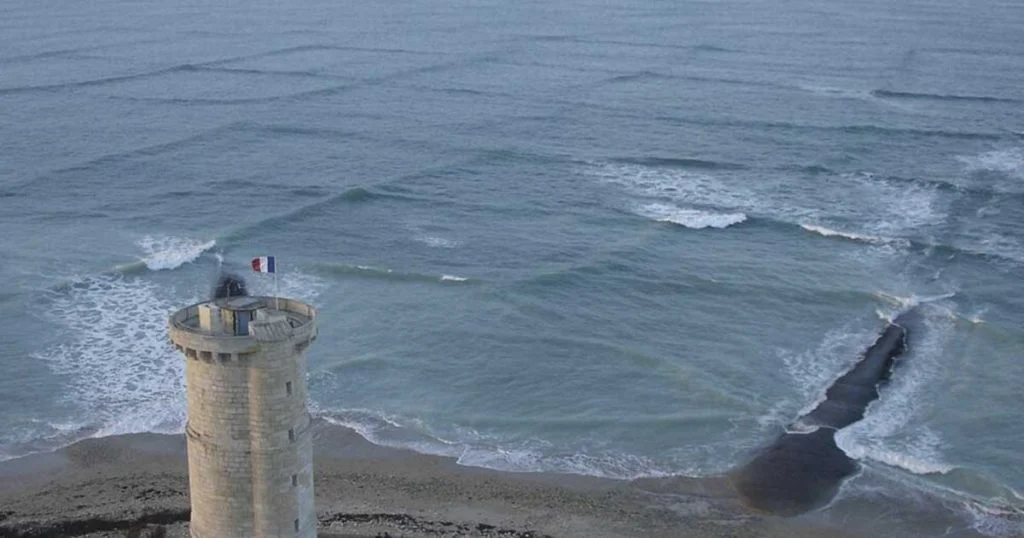
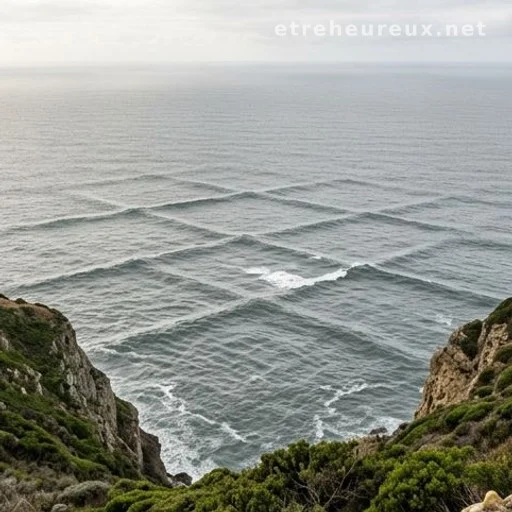
They look like a giant checkerboard carved into the sea’s surface, and they draw thousands of tourists to coastal viewpoints every year. But square waves — also known as cross seas — are among the most hazardous conditions a swimmer or boater can encounter in open water. Here is what science says about them, and why experts urge anyone who spots them to stay on shore.
In brief
- —Two colliding swells create waves up to 10 feet high
- —Linked to a large share of ship accidents, per a 2004 study
- —Best viewed from land — never from the water
Two swells collide to form a checkerboard up to 10 feet high
A square wave — technically called a cross sea — forms when two or more wave systems travelling in different directions intersect. The result is a striking grid-like pattern on the water’s surface, often compared to a checkerboard. The European Space Agency described the underlying conditions in 2010 as “quite common in the ocean,” occurring “when a windsea, and a swell, or two swell systems, coexist.”