
Despite how orderly they appear from above, the forces at work beneath the surface are anything but calm. Cross sea swells can build to 10 feet in height, and the competing wave directions generate chaotic, unpredictable currents that are extremely difficult to read from water level.
Scientists associate the phenomenon with the Kadomtsev-Petviashvili equation, a mathematical formula used to describe nonlinear wave motion and the way different weather or ocean systems interact with one another.
A 2004 study tied crossing sea states to a large share of ship accidents
The visual appeal of square waves can obscure a serious hazard. A 2004 study found that “a large percentage of ship accidents occurred in crossing sea states” — a direct reference to the conditions that produce cross seas. For vessels of any size, the competing wave angles make it extremely difficult to maintain a stable course.
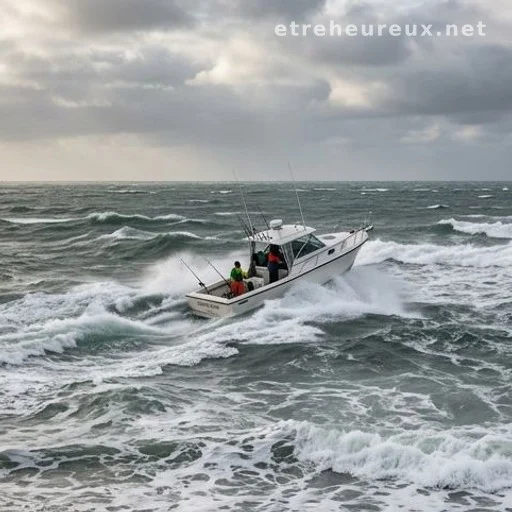
Swimmers face an equally dangerous environment. The intersecting currents pull in multiple directions simultaneously, making it hard to stay oriented or to swim toward shore. Unlike a rip current, which typically runs in a single identifiable direction, a cross sea offers no clear escape route for someone caught in the water.
The safest course of action, according to the guidance surrounding this phenomenon, is straightforward: if you spot square waves from the shore, do not enter the water. Stay on the beach and wait for conditions to improve before swimming or launching a boat.
What makes ocean waves cross?
Waves in the open ocean rarely travel in a single direction. Wind patterns, storms and the shape of coastlines can send swells moving along entirely different trajectories. When two of these systems overlap — particularly around peninsulas where separate seas meet — their energies combine rather than cancel out, producing the grid-like surface pattern known as a cross sea. The European Space Agency noted in 2010 that such conditions are actually quite common in the world’s oceans, even if they are rarely visible from shore in their most dramatic form.