
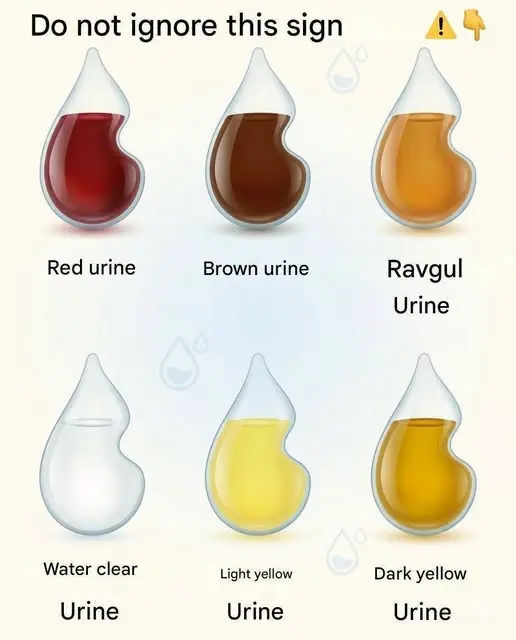
The color of your urine changes every day, and most of the time the cause is as simple as what you drank or ate. But some color shifts — particularly red, brown, or persistent orange — can point to underlying conditions that deserve medical attention. Understanding the spectrum helps you tell the difference between a harmless variation and a signal worth acting on.

In brief
- —Pale yellow urine signals healthy hydration
- —Red or pink urine may indicate blood — see a doctor if diet doesn’t explain it
- —Brown or orange urine can point to liver or kidney issues
Urochrome: the pigment behind every shade of yellow
Urine owes its characteristic yellow hue to urochrome, a pigment released when the body breaks down old red blood cells. The more diluted the urine, the paler the color; the more concentrated, the deeper the shade.
See the rest on the next page ⬇⬇