
Night owls, social jet lag, and the 16-minute gap every morning
The Sleepopolis survey found that non-bed-makers get moving about 16 minutes later than their bed-making counterparts, who often wake without an alarm at all. The gap is not about willpower. Morning people begin suppressing melatonin around 6 a.m., so waking feels natural. Night owls are still producing the hormone at 7 a.m., making the alarm feel like an assault on their biology.
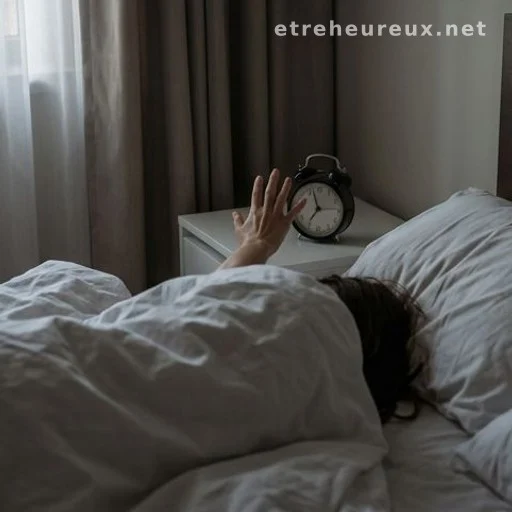
A 2017 study by researchers at the University of Tübingen and the Central Institute of Mental Health in Mannheim found that evening types take longer to fall asleep, a measure called sleep latency, and accumulate a sleep debt during the workweek that they repay on weekends. When your body wants to rest at 1 a.m. but your alarm is set for 7 a.m., bed-making becomes the first casualty of a rushed morning.
A 2021 study by researchers at the University of Warwick and the University of Tartu examined 2,515 Estonian adults using both personality assessments and DNA samples and confirmed that people who score lower on self-discipline tend to have later chronotypes. Researchers describe the mismatch between internal biology and society’s early schedules as social jet lag — a structural disadvantage that takes a measurable toll on well-being.
A 2022 study in Chronobiology International found that eveningness is associated with higher depressive symptoms, particularly among people who are also high in neuroticism or low in conscientiousness. The researchers argued that chronotype should be considered in both the prevention and diagnosis of mood disorders.
Curiosity, disorder, and the creativity link backed by lab research
The survey labeled non-bed-makers as “curious” and “sarcastic” — traits that map onto openness to experience, the Big Five dimension measuring tolerance for ambiguity, intellectual restlessness, and novelty-seeking. People high in openness tend to get bored with routine. The Estonian genetic study found that the link between openness and late chronotypes has a biological basis, not just a behavioral one.

Organization expert Kelly McMenamin, co-founder of PixiesDidIt, estimates that only about 40% of the population actually needs external order to feel mentally clear. “Non-bed-makers don’t need to-do lists to get things done,” she told Bustle. “And their homes are often more cluttered, but leaving the bed unmade has no negative effect on their mental clarity.”