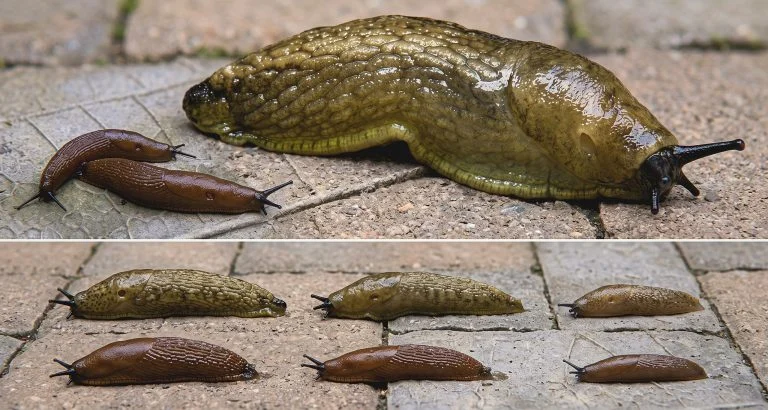
His first instinct was to ignore it. Bathrooms regularly collect odd debris: strips of rubber, clumps of hair, soap residue, fragments of packaging. A wet piece of tissue can become almost unrecognizable. There was no obvious reason to give this particular shape a second thought.
But something about its texture stopped him. The surface looked uneven, organic rather than manufactured. Its edges were irregular in a way that rubber or plastic simply is not. He leaned forward slightly — and then it moved. Not dramatically, not with any sudden burst of motion, but with a faint, unmistakable shift in position. That was enough. The object was alive.
A photograph, an online search, and the word ‘leech’
Once certain the creature was alive, he took a photograph and began searching online, using descriptions based on its appearance: a small dark worm-like creature on a wet bathroom floor, found near a drain. The results covered a wide range of possibilities.
After comparing the photograph with multiple images and paying close attention to shape and texture, one answer kept appearing. The creature appeared to be a leech.
That identification immediately reframed the encounter. Leeches belong to the same broad group of segmented worms as earthworms, but their biology and behavior differ considerably. Some species are predators that feed on small invertebrates. Others are known for attaching to vertebrate hosts and feeding on blood — a characteristic that has made leeches both feared and, in certain medical contexts, studied for centuries.
Their bodies are also highly flexible. A leech can appear short and thick when contracted and considerably longer when extended, which likely explains why the creature had looked so much like an inert piece of material at first glance.