Sciatica is not a disease but a symptom — a sign that this nerve is being irritated or compressed somewhere along its path. Common triggers include a herniated disc, degenerative changes in the spine, or a narrowing of the spinal canal.
Depending on where the compression occurs, pain, numbness, tingling, burning, or weakness can be felt anywhere from the lower back and buttocks to the calf or foot. Because the nerve covers so much ground, even a localized problem can produce symptoms across the entire leg.
Sciatica affects the nerve, not just the muscle
Sciatica is a symptom produced by irritation or compression of the sciatic nerve, which can originate from several distinct conditions including a herniated disc, spinal canal narrowing, or degenerative changes in the spine. Because the causes differ, so do the appropriate treatments. Muscle-focused techniques such as self-massage may address tension in surrounding tissue, but they cannot resolve structural problems affecting the nerve itself.
Why a tennis ball targets the piriformis muscle in particular
Tennis ball massage works by applying localized pressure to muscles that feel tight or tender. It is, in essence, a simple form of self-massage that requires no equipment beyond the ball itself.
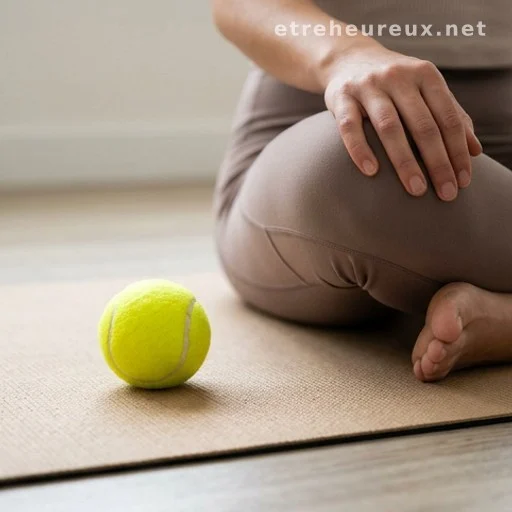
One muscle frequently linked to sciatic symptoms is the piriformis — a small muscle buried deep in the buttock, running close to the path of the sciatic nerve. When surrounding muscles become tense or irritated, gentle pressure may help reduce that tightness and improve comfort.
It is important to be clear about what this technique cannot do: tennis ball massage does not treat every cause of sciatica. If symptoms stem from a spinal disc problem or another structural condition affecting the nerve directly, addressing that underlying cause is essential and cannot be replaced by self-massage.